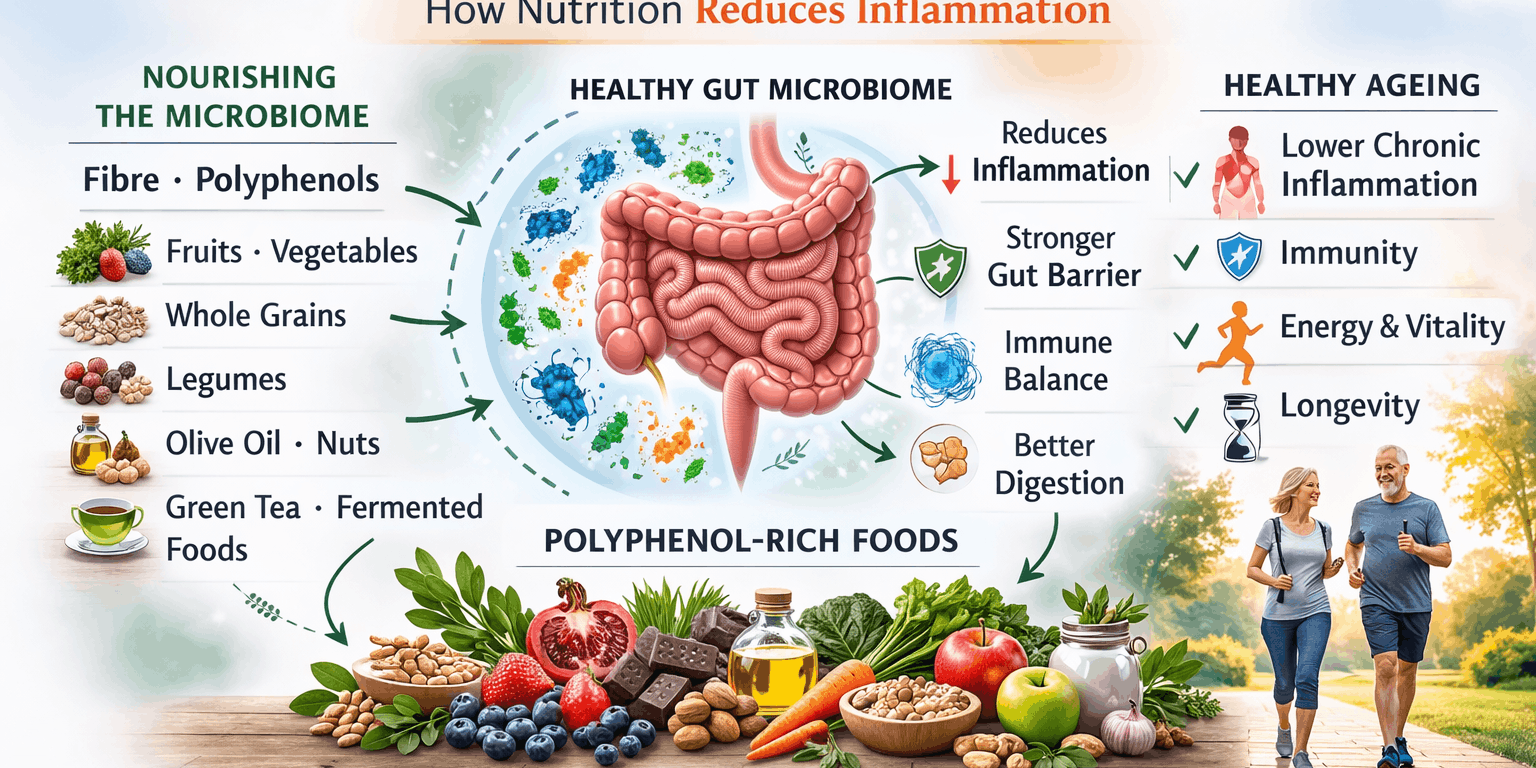
Introduction: Ageing Well Starts in the Gut
Healthy ageing isn’t just about living longer — it’s about maintaining vitality, mobility, and resilience as we age. Increasingly, research shows that one of the most powerful influences on how we age lies within the gut microbiome.
The trillions of microbes living in our digestive tract play a key role in regulating inflammation, immunity, and metabolic health — all of which strongly influence age-related disease risk.
Inflammageing: The Hidden Driver of Age-Related Decline
As we get older, many people experience a gradual rise in chronic low-grade inflammation, often referred to as inflammageing. This type of inflammation is linked to:
- Cardiovascular disease
- Type 2 diabetes
- Cognitive decline
- Frailty and muscle loss
- Reduced immune resilience
One of the strongest contributors to inflammageing is changes in the gut microbiome.
How the Gut Microbiome Changes With Age
With ageing, the gut microbiome often becomes:
- Less diverse
- Less resilient
- More dominated by pro-inflammatory bacteria
These shifts can weaken the gut barrier, allowing inflammatory compounds to enter circulation and activate the immune system unnecessarily.
Diet is one of the most important factors influencing whether these changes accelerate — or can be slowed and even partially reversed.
Polyphenols: Feeding Longevity-Promoting Bacteria
Polyphenols are naturally occurring compounds found in plant foods such as:
- Berries
- Apples and pears
- Olive oil
- Green tea
- Dark chocolate
- Nuts and vegetables
These compounds are not fully absorbed in the small intestine. Instead, they reach the colon, where they are transformed by gut bacteria into bioactive metabolites with anti-inflammatory and antioxidant effects.
How Polyphenols Reduce Inflammation Through the Gut
Polyphenol-rich diets have been shown to:
- Increase beneficial gut bacteria
- Improve microbial diversity
- Support production of anti-inflammatory compounds
- Strengthen the gut barrier
Some microbial metabolites derived from polyphenols help protect intestinal cells from oxidative stress and reduce immune activation — key mechanisms for supporting healthy ageing.
Practical Nutrition Strategies for Healthy Ageing
A gut-supportive dietary pattern for ageing well includes:
- A wide variety of plant foods (aiming for diversity over perfection)
- Daily sources of fibre from vegetables, legumes, and whole grains
- Regular intake of polyphenol-rich foods
- Healthy fats such as olive oil and omega-3s
- Minimising ultra-processed foods that disrupt microbial balance.
Key Takeaway
Healthy ageing is deeply connected to gut health. By nourishing the microbiome through polyphenol-rich, fibre-dense foods, we can help reduce chronic inflammation, support immune balance, and promote resilience across the lifespan.