Allergies: A Nervous System Story, Not Just an Immune One
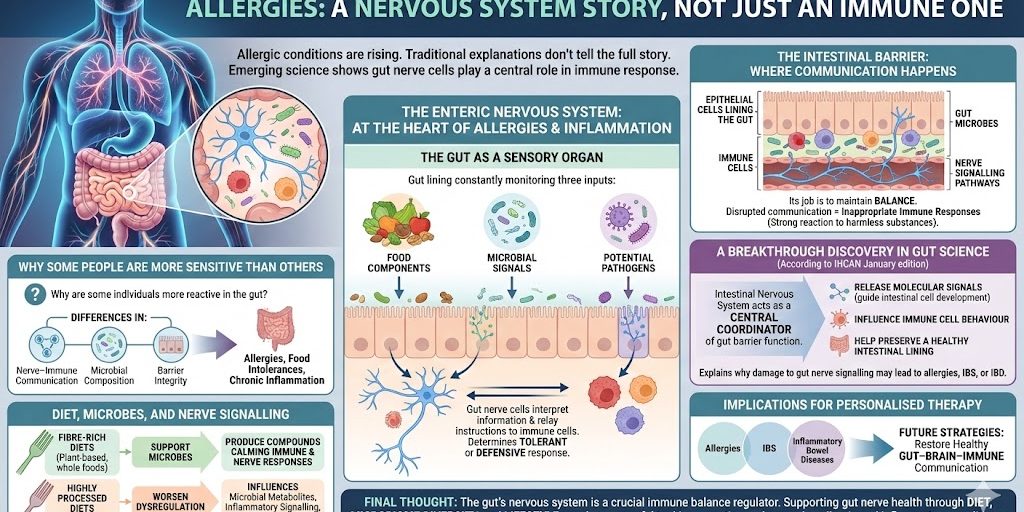
Allergic conditions are rising worldwide, and traditional explanations don’t tell the full story. Increasingly, scientists are discovering that nerve cells within the gut play a central role in determining how the immune system responds to the environment.
This emerging field of research places the enteric nervous system at the heart of allergic and inflammatory diseases.
The Gut as a Sensory Organ
The gut is not passive — it is a highly sensitive organ that constantly monitors:
- Food components
- Microbial signals
- Potential pathogens
Gut nerve cells interpret this information and relay instructions to immune cells, helping determine whether the response should be tolerant or defensive.
The Intestinal Barrier: Where Communication Happens
The intestinal barrier is made up of:
- Epithelial cells lining the gut
- Immune cells
- Gut microbes
- Nerve signalling pathways
Its job is to maintain balance. When this communication system is disrupted, immune responses can become inappropriate — reacting strongly to substances that pose no real threat.
A Breakthrough Discovery in Gut Science
According to recent research discussed in the IHCAN January edition, the intestinal nervous system acts as a central coordinator of gut barrier function.
The study shows that gut nerve cells:
- Release molecular signals that guide intestinal cell development
- Influence immune cell behaviour
- Help preserve a healthy intestinal lining
This discovery helps explain why damage to gut nerve signalling may lead to allergies, IBS, or chronic inflammatory bowel diseases.
Why Some People Are More Sensitive Than Others
These findings shed light on a long-standing question:
why are some individuals more reactive in the gut?
Differences in:
- Nerve–immune communication
- Microbial composition
- Barrier integrity
may explain why some people develop allergies, food intolerances, or chronic inflammation while others do not
Diet, Microbes, and Nerve Signalling
Diet does more than provide nutrients — it directly influences:
- Microbial metabolites
- Inflammatory signalling
- Gut nerve activity
Fibre-rich diets support microbes that produce compounds calming both immune and nerve responses, while highly processed diets may worsen dysregulation.
Implications for Personalised Therapy
Understanding how gut nerve cells interact with immune responses opens new doors for targeted and personalised approaches to:
- Allergies
- Irritable bowel syndrome (IBS)
- Inflammatory bowel diseases
Rather than focusing only on symptom control, future strategies may aim to restore healthy gut–brain–immune communication.
Final Thought
The gut’s nervous system is emerging as one of the most important regulators of immune balance. Supporting gut nerve health through diet, microbiome diversity, and lifestyle may be a powerful tool in preventing and managing allergic and inflammatory conditions.